Wooden Marble Runs — What’s Actually Different, and Who They’re Really For
Wood isn’t automatically better than plastic. It’s different — in feel, sound, lifespan, and the kind of play it enables. Here’s an honest look at when that difference matters.

Wood vs plastic — what the difference actually is
Both build marble runs. That’s where the similarity ends. These are the real differences, without the marketing version of either.
| 🪵 Wooden sets | 🔵 Plastic sets | |
|---|---|---|
| Feel in hand | Heavier, warm to the touch. Natural grain varies piece to piece. Children handle pieces more carefully — not because they’re told to, but because the material communicates quality. | Lighter, consistent surface. Easier for small hands to snap together. Tactile feedback is about the connector click, not the material itself. |
| Sound | Marbles produce a softer, lower-pitched knock on wood channels. The overall sound profile is quieter and more tonal — something parents notice across a room. | Clear plastic tubes create a bright, higher-pitched rattle as marbles roll and bounce. More audibly dynamic — kids who want to hear the marble love it; some parents find it grating. |
| Build complexity | Typically simpler configurations — gravity-fed slides and ramps rather than enclosed tube circuits. Works well for ages 3–6. Less multi-level engineering complexity. | Clear tube systems allow much more track variety — spirals, funnels, elevation switches, enclosed circuits. Scales from simple to genuinely complex for ages 4–12. |
| Lifespan | 5–10 years with normal indoor use. Beech and birch don’t fatigue at connector points the way ABS does. The main risk is moisture damage if stored incorrectly. | 2–5 years. Connector walls thin over repeated assembly cycles, particularly in budget sets. Higher-quality ABS sets can last longer with careful use. |
| Gift perception | Higher perceived quality. Natural wood signals thoughtfulness — particularly relevant when the gift-giver is a grandparent or someone who values craftsmanship over feature count. | More feature-forward. The piece count and track variety are immediately visible, which communicates scale and value to parents. Less gift-wrap appeal, more play-value appeal. |
| Price per piece | Higher. Wood costs more to process, paint safely, and finish to a consistent standard. A 50-piece wooden set costs more than a 100-piece plastic set, and that gap is real and justified. | Lower per piece. ABS injection moulding scales efficiently; piece count climbs faster than price. The value calculation is better for families buying primarily for play volume. |
| Maintenance | Wipe with a barely-damp cloth. Avoid dishwashers, prolonged water contact, and direct sun. Store in a dry location — a cotton bag or wooden box, not a sealed plastic bin. | Dishwasher-safe in most cases (top rack, cool setting). More tolerant of humidity and temperature variation. Easier to clean after floor play with pets or toddlers around. |
Who a wooden set is genuinely right for
This isn’t about which is objectively better. It’s about which is better for your specific situation.
A wooden set is the right call when…
- Your child is 3–5 and this is their first marble run — simpler mechanics, no small connector pieces, and glass marbles large enough to be safe at this age
- You’re buying as a gift and the recipient values natural materials, Montessori-adjacent toys, or craftsmanship over feature count
- A grandparent is choosing — wooden sets communicate quality in the way that resonates with that buying mindset
- You want something that will still be in good condition to pass on or resell in five to ten years
- The home aesthetic matters — a wooden marble run left assembled on a shelf looks like a considered object, not like scattered toy parts
- You’re buying for a child who’s already shown they handle toys carefully; wood rewards that quality of play
A plastic set makes more sense when…
- Your child is 6–10 and wants engineering complexity — multiple track types, spirals, funnels, elevation switches. Wood doesn’t offer that range at this age
- You want the most play variety per dollar — a $40 plastic set will have more configuration options than a $40 wooden set, without question
- There are younger siblings in the house who will inevitably handle the set roughly; wood shows wear more visibly than ABS
- Ease of cleaning is a real consideration — families with pets or messy play situations will find plastic significantly easier to maintain
- The child specifically wants to see the marble inside the track — the transparent tube aesthetic is impossible in wood
- You’re buying a first set on a tight budget and want to maximise the chance of immediate engagement
What wood does that plastic doesn’t
There’s a specific quality to handling a well-made wooden toy that’s hard to describe without resorting to words that sound like marketing copy. I’ll try to be precise instead.
Weight. A wooden marble run piece is heavier than its plastic equivalent in a way that changes how children interact with it. They place pieces rather than snap them. The build process is slower and more deliberate, which at ages 3–5 is actually a feature — it keeps the hands occupied and the attention focused longer than the quick-click of a plastic connector.
Sound. The knock of a glass marble on a beech wood channel is a different frequency from the rattle of the same marble in a plastic tube. Parents who find the plastic version too loud consistently find the wooden version tolerable across a room. This is a real and practical difference, not an aesthetic preference.
Grain. No two wooden pieces are identical. The grain variation means a child building with wood is handling natural material — genuinely different from the uniform surface of injection-moulded ABS. Whether that matters depends entirely on the child and the parent.

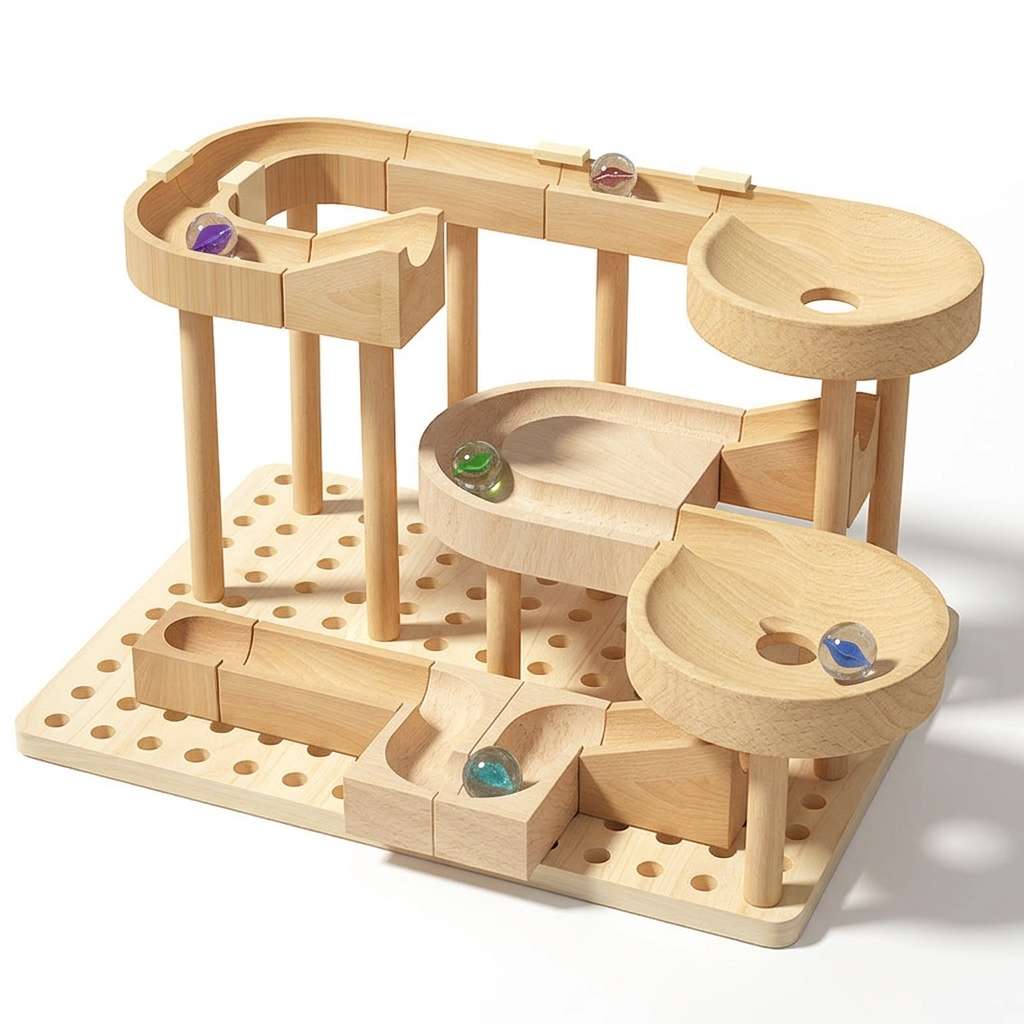
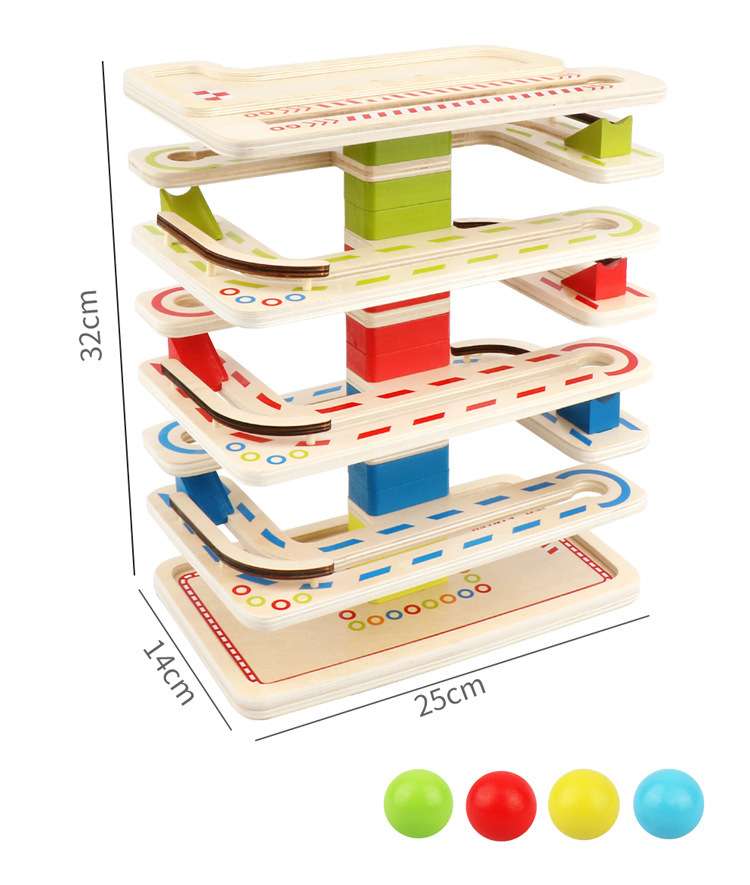
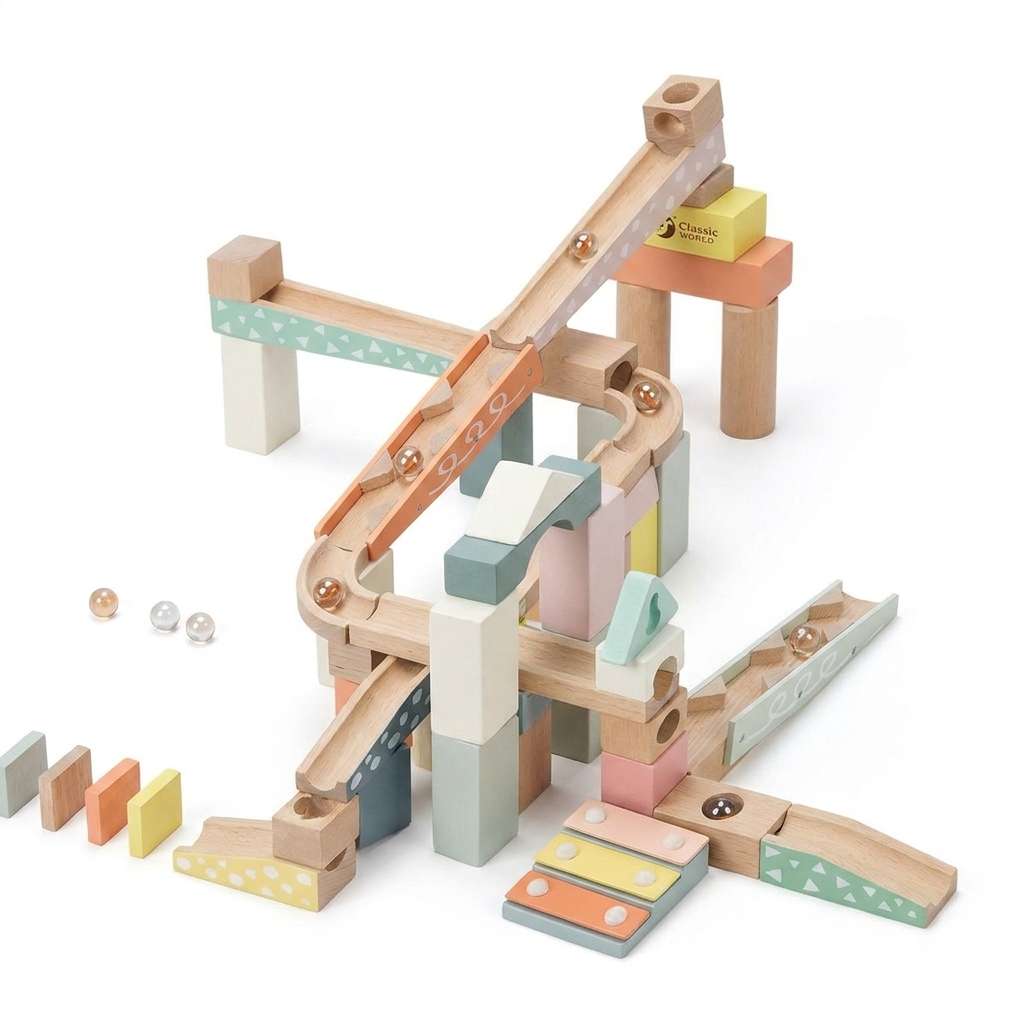
Three wooden sets — three different use cases
All made from natural beech or birch with non-toxic finishes and smooth rounded edges. Prices current as of April 2026.
How to make a wooden set last
Wood is more durable than plastic over the long term, but only with basic care. These are the things that actually matter.
“The first time I picked up a beech wood marble run piece in a product review session, I held it for longer than I needed to. That’s the whole tell. When a material is right, you keep handling it. When it’s wrong, you put it down. I can’t put a number on that, but after eight years of testing toys, I trust it more than most metrics I can measure.”
Questions parents actually ask
Is a wooden marble run better than plastic?
Not categorically — differently. Wood offers a warmer sensory experience, greater longevity, and higher perceived quality as a gift. Plastic offers more track complexity, transparent tubes that let children watch the marble move, and more build variety per dollar. The right choice depends on the child’s age, what you value in a toy, and the play context. For ages 3–5 and gift scenarios, wood is often the better fit. For ages 6+ who want engineering complexity, plastic systems offer significantly more.
What age is a wooden marble run suitable for?
Wooden marble runs are particularly well-suited to ages 3–6. The simpler stacking and sliding mechanics are more accessible for younger children than plastic connector systems. Most wooden sets also use larger glass marbles — 16–20mm — which are safer at ages 3–4 than the smaller marbles found in some plastic sets. For children 6 and up who want engineering depth, plastic track systems typically offer more configuration options.
Are wooden marble runs safe?
Yes, when made to proper standards. The things to check: natural wood finish without lead-based paint or synthetic lacquers (look for explicitly non-toxic or food-safe finish statements), and marble diameter at or above 16mm — the CPSC small-parts threshold. All wooden sets in our range use non-toxic finishes and marbles sized at or above 16mm. We don’t currently publish third-party ASTM lab reports; FAQ Q3 explains our materials position in full. As with any marble toy, close supervision for under-3s is still recommended.
How long does a wooden marble run last?
A well-made wooden set from quality beech or birch, stored correctly, will realistically last 5–10 years of regular play — compared to 2–5 years for ABS plastic sets. The connector points don’t fatigue the way plastic does. The one caveat is moisture: store wooden sets in a dry, ventilated location and they’ll outlast almost everything else in a child’s toy collection. Stored incorrectly, they warp, and warped joints mean marbles stall mid-track.
Can wooden and plastic marble run pieces be mixed together?
No — the track geometries are entirely different between wooden slide systems and plastic tube systems. They’re not designed to connect, and forcing them together won’t produce a functional track. Keep them as separate sets. The marble sizes may also differ; wooden sets typically use 16–18mm glass marbles, while some plastic sets use slightly smaller marbles. Swapping marbles between systems can affect flow rate noticeably.
What is the best wooden marble run for a gift?
For a gift where presentation matters, the Wooden Marble Run Track Toy ($71.99) is the standout — the material quality is immediately apparent when the box is opened, and the slide format looks unlike anything in the plastic category. For a more accessible gift price with the same natural material quality, the Beechwood Marble Run ($30.99) is the honest best-value recommendation. Both work well for ages 3–6 and both come in packaging that doesn’t require additional gift-wrapping.